Back to School Picture Books & Resources for Teachers
Welcome to your starting point for the new school year. This back-to-school hub brings together picture book lists, read-aloud ideas, and printable activities for the first days and weeks of school. Use it to find books that introduce routines, build classroom community, support first-day nerves, and give students simple ways to respond after a read-aloud.
At a Glance
Focus: Picture books and resources for the first days and weeks of school
Best for: K to 5 classrooms, library lessons, and first-week read-aloud planning
Use this page when you want books and activities for:
- first-day nerves
- classroom community
- routines and expectations
- friendship, kindness, and inclusion
- simple read-aloud follow-up activities
Jump to Section
Disclosure: This post contains affiliate links. If you purchase anything through them, I will get a small referral fee and you will be supporting me and my blog at no extra cost to you, so thank you! You can find more information here.
Why Use Picture Books at the Start of the Year?
Picture books are one of the easiest ways to set the tone during the first weeks of school.
Students are meeting new classmates, learning routines, finding their way around the classroom, and working out what it feels like to be part of a new group. A story gives everyone one shared place to begin.
You can use back-to-school picture books to talk about first-day worries, classroom expectations, kindness, belonging, and what it means to be part of a class community.
They also give students a gentle way into literacy work. You can use the same story to talk about character feelings, problem and solution, making connections, retelling, inference, and the message of the book, without turning the first week into heavy worksheet time.



Teaching With Back-to-School Picture Books
A back-to-school read-aloud does not need to become a big lesson. In the first week, simple is better.
Read the book, pause to notice what the character is feeling or choosing, then ask students to connect one story moment to classroom life.
You might ask:
- How does the character feel about starting school?
- What helps the character feel more comfortable?
- What does this story show about being part of a class?
- What could this look like in our classroom?
Then use a quick draw-or-write page, class chart, partner talk, or exit slip. That keeps the focus on the story while still giving you something concrete from students.

Back to School Book Lists
Use these book lists to find picture books that match what you need most at the beginning of the year.
Whether you are helping students settle in, building classroom community, teaching routines, or supporting first-day jitters, you will find a starting point here.
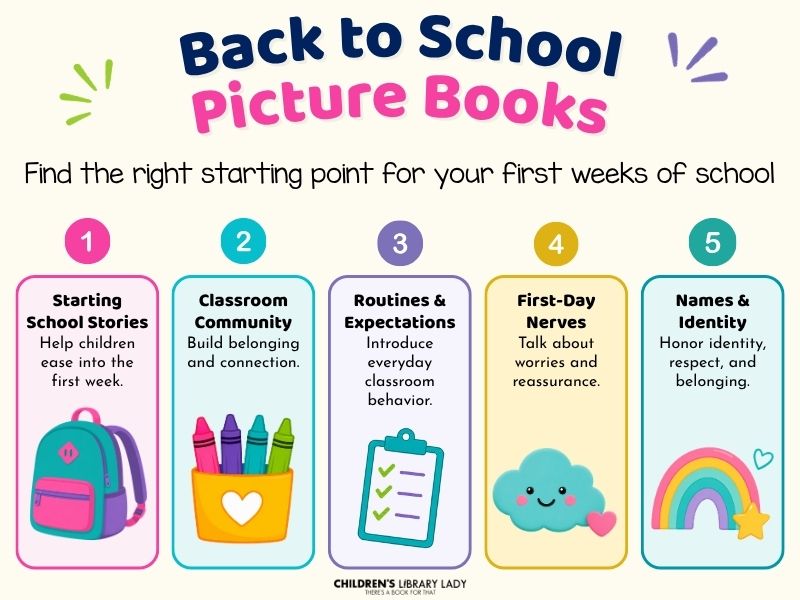
Books About Starting School
Find books for introducing children to what school is like and helping them feel prepared.
This section is helpful for preschool, kindergarten, and early primary teachers who want to ease worries and build familiarity before or during the first days of school.
🔗 Related Books: More Books for School Transitions
Example Books:
- The King of Kindergarten by Derrick Barnes
- All Are Welcome by Alexandra Penfold
- The Pigeon Has to Go to School! by Mo Willems
Books That Build Classroom Community
Use these stories to talk about inclusion, friendship, collaboration, and what it feels like to belong.
These books work well when students are still getting to know each other and you want to start building a classroom community through shared stories and discussion.
🔗 Related Books: Stories That Help Students Feel Seen and Included
Example Books:
- Our Class is a Family by Shannon Olsen
- The Day You Begin by Jacqueline Woodson
- You Hold Me Up by Monique Gray Smith
Books That Support Classroom Routines
Use picture books to introduce routines, expectations, transitions, and everyday classroom behavior.
These books are a good fit when you want to talk about what students do in real classroom moments, such as listening during a read-aloud, moving around the room, joining a group, taking turns, or handling mistakes.
🔗 Related Books: Books for Teaching Classroom Expectations and Transitions
Example Books:
- David Goes to School by David Shannon
- Miss Bindergarten Gets Ready for Kindergarten by Joseph Slate
- Our Class is a Family by Shannon Olsen
Books That Ease First Day Nerves
Help children understand and talk about first-day worries with reassuring picture books.
These stories give students a safe way to talk about feeling nervous, unsure, excited, or overwhelmed without making anyone share more than they want to.
🔗 Related Books: Stories That Help with First Day Worries
Example Books:
- First Day Jitters by Julie Danneberg
- The King of Kindergarten by Derrick Barnes
- School’s First Day of School by Adam Rex
Books About Names and Identity
Use these books when students are learning about each other, sharing parts of who they are, and talking about why names matter.
These stories work well during the first weeks of school because they help students notice identity, belonging, and respect without putting anyone on the spot.
🔗 Related Books: Books About Names and Identity
Example Books:
- The Name Jar by Yangsook Choi
- Alma and How She Got Her Name by Juana Martinez-Neal
- Your Name Is a Song by Jamilah Thompkins-Bigelow
You’ve found a back-to-school book. Now, what?
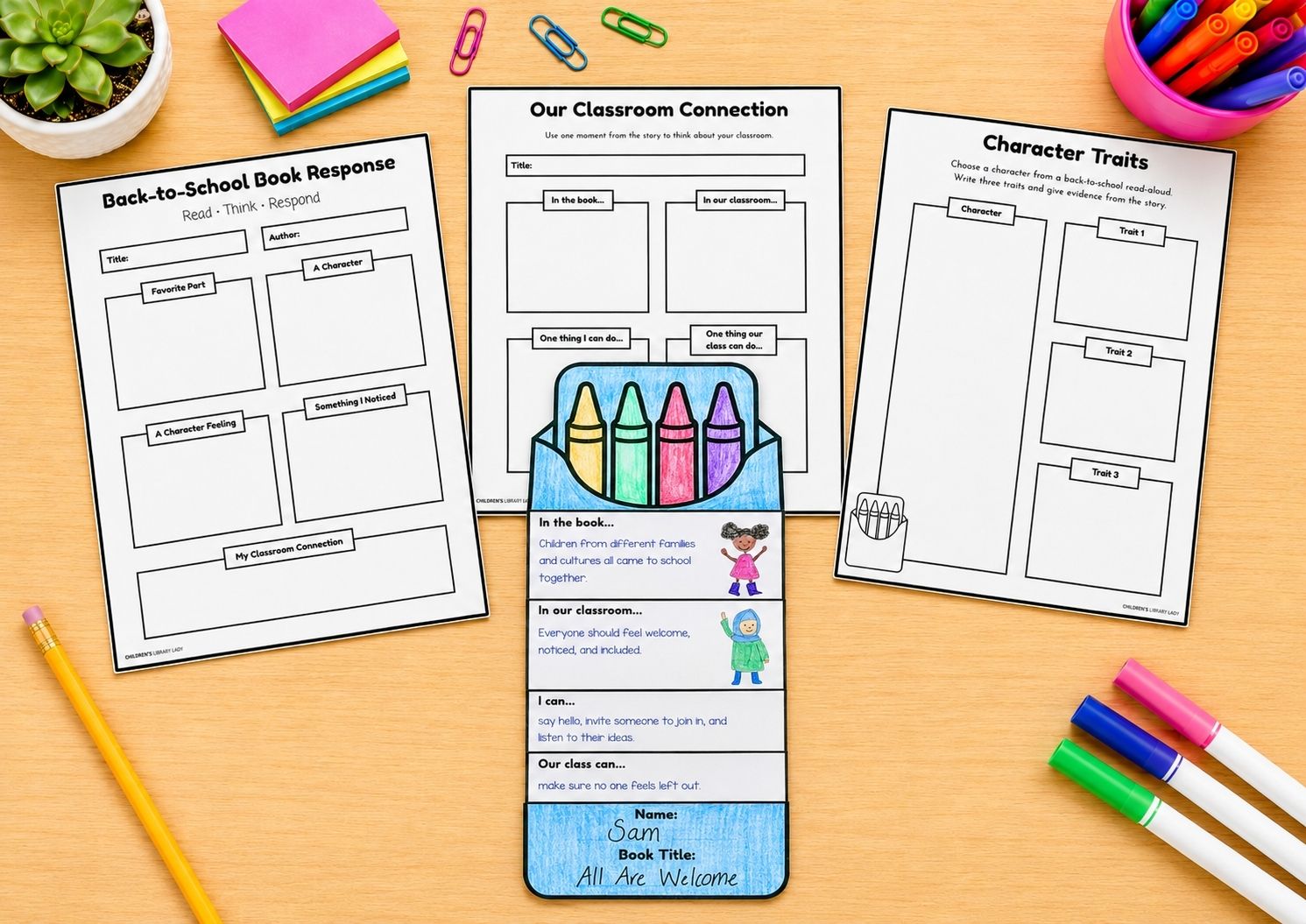
After the read-aloud, students need a simple way to connect the story to the classroom. These free Back-to-School Read-Aloud Response Pages give them a low-pressure way to draw or write about what happened, how a character felt, and what the story reminds them to do in the classroom.
Need More Back-to-School Read-Aloud Response Pages?
If you want to keep using read-alouds during the first weeks of school, the Back to School Reading Response Activities pack gives you lots of options.
It works well when you want flexible follow-up pages that help students respond to stories about classroom community, expectations, feelings, and first-week transitions without any lesson planning.
Back to School Frequently Asked Questions
- Why use picture books during the first week of school? Picture books give you an easy way to start important classroom conversations. They help students talk about worries, routines, kindness, belonging, and what it means to be part of a new class.
- What themes work well for back-to-school read-alouds? Helpful themes include first-day worries, belonging, classroom routines, friendship, kindness, inclusion, names, identity, and trying something new.
- Can back-to-school picture books work with older elementary students? Yes. Older students can still have thoughtful discussions around picture books, especially when the focus is character choices, theme, point of view, identity, or classroom community.
- How can teachers use back-to-school books without planning a full lesson? Read one book, stop to notice one important story moment, then have students draw or write a quick response about the character, the feeling, or the classroom connection.
Back to School Picture Book Bundle
A bundle of ready-to-use printable activities for multiple back-to-school picture books.
Use this when you want one flexible resource you can draw from across several read-alouds during the first weeks of school.
Explore the bundle here.
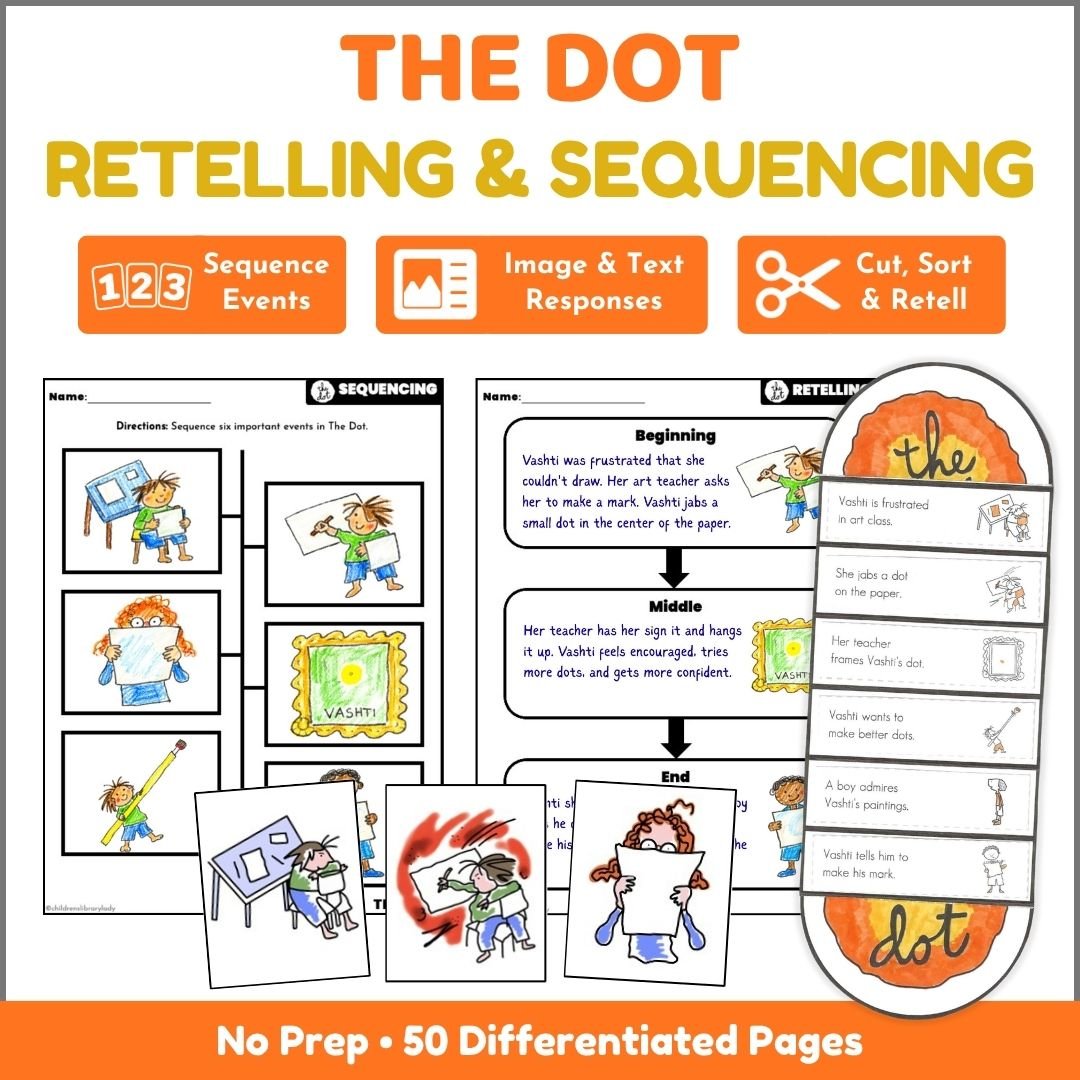
Back to School Retelling and Sequencing Foldable Books
A set of foldable response activities that help students retell and sequence story events.
Use these when you want students to revisit the story, strengthen comprehension, and practice putting events in order after reading.
Includes foldable books for:
- David Goes to School
- Pete the Cat: Rocking in My School Shoes
- The Pigeon Has to Go to School!
- The Crayons Go Back to School
- and more